
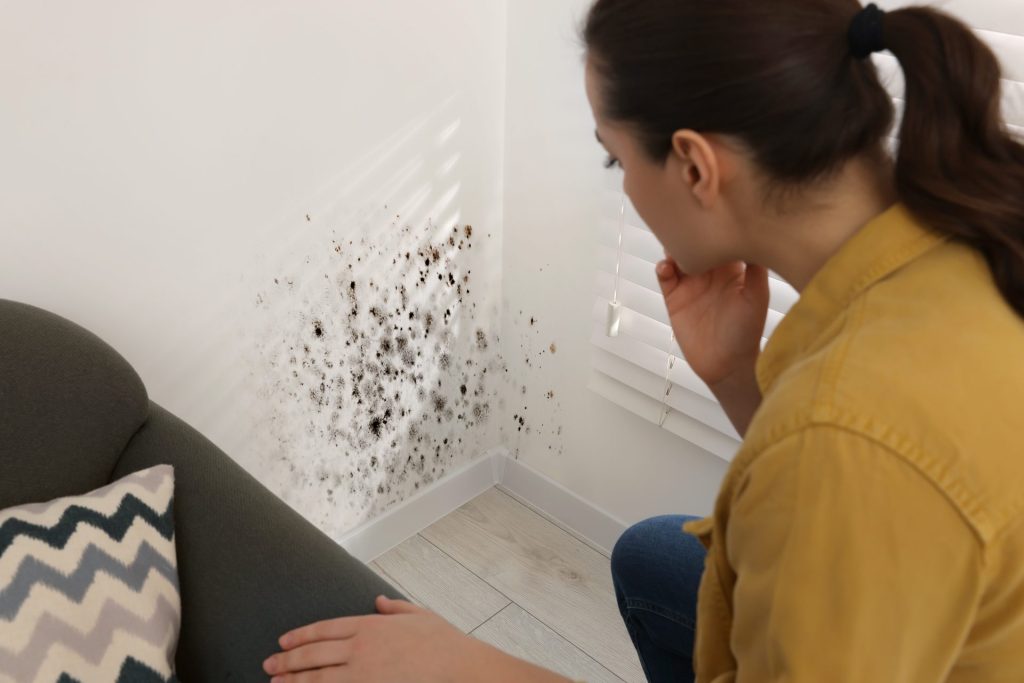
The short answer: The 10 warning signs of mould toxicity are a cough or wheeze that will not clear, a blocked or runny nose, asthma that starts or gets worse, frequent colds and chest infections, itchy or watery eyes, itchy skin or rashes, fatigue that rest does not fix, brain fog, headaches, and low mood or anxiety. The pattern matters most: symptoms that ease when you are away from a damp building and return when you come home.
You have been tired for months. Your head feels foggy, your sinuses are never quite clear, and your blood tests keep coming back normal. If you live or work somewhere damp, mould deserves a place on the list of things to look at.
In this article I’ll go through the 10 warning signs of mould toxicity (or mold toxicity, as it is spelled in the US), what the research says about each one, and what to do if they sound familiar.
What is mould toxicity?
Mould toxicity, also called mould illness, is the term used in functional medicine and nutritional therapy for ill health linked to time spent in a damp, mouldy building.
That damp buildings make people ill is not in doubt. The World Health Organization reviewed the evidence on dampness and mould and found that people living in damp or mouldy buildings have more respiratory symptoms, respiratory infections, allergies and asthma, and that their immune systems can be affected. The UK government’s guidance on damp and mould says damp and mould in the home can produce allergens, irritants, mould spores and other toxins that are harmful to health.
Some moulds also produce mycotoxins. These are toxic compounds, well enough understood that there are international limits for mycotoxins in food.
What researchers are still working out is which part of a damp building does the damage: the spores, the fragments, the mycotoxins, the bacteria that grow alongside, or all of them together. For you, the practical point is the same either way. If your home is damp and you are unwell, the two may be connected.
The 10 warning signs of mould toxicity
The first six signs have the strongest research behind them. The last four have been studied less, but they are reported by people who live or work in damp buildings.
1. A cough or wheeze that will not clear
Cough, wheeze and breathlessness are the best documented effects of damp and mould indoors.
2. A blocked or runny nose and sinus trouble
Symptoms in the nose and throat are consistently more common in damp homes. Many people describe a cold that never fully goes.
3. Asthma that starts or gets worse
The WHO found enough evidence to link indoor damp with asthma developing, and with existing asthma getting worse.
4. Catching every cold and chest infection
Respiratory infections are more common in people living with damp and mould.
5. Itchy, red or watery eyes
The UK guidance lists eye irritation, which can lead to allergic conjunctivitis, among the effects of damp and mould.
6. Itchy skin or rashes
Skin can react too. The UK guidance lists eczema and other patches of itchy skin or rashes. If eczema is your main concern, see my article on eczema and gut health.
7. Fatigue that rest does not fix
In a study of Finnish hospital staff working in a damp building, 77% reported fatigue, compared with 24% of an unexposed group. It was a small study, and the WHO notes that research on fatigue is still limited, but it matches what many people describe. Fatigue has many possible causes, and I cover the others in my article on the root causes of chronic fatigue.
8. Brain fog
In the same study, 62% of the staff exposed to damp reported brain fog, compared with 11% of the unexposed group. In laboratory research, mice that breathed in mould spores showed immune activation in the brain and did worse on memory tests. That is animal research, so it shows a possible mechanism and not proof in people. If this is your main symptom, my article on what causes brain fog covers the other causes worth checking.
9. Headaches
Headaches are among the symptoms reported in studies of damp buildings, although the WHO notes the research here is thinner than it is for the chest and nose.
10. Low mood or anxiety
The UK guidance recognises that people living with damp and mould may experience poor mental health as a result. Part of that is the strain of living in a home you cannot fix. The mouse study above also found more anxious behaviour after mould exposure.
The pattern to look for
Every one of these signs has other possible causes. What points towards mould is the pattern: symptoms that began after moving house or after a leak, that ease when you are away for a week or two, and that return when you come home. A musty smell, visible mould, condensation or a history of water damage all add weight.
Why some people react more than others
Two people can share the same damp flat and only one of them feels ill. The UK guidance lists the people most at risk: those with an existing health condition such as allergies or asthma, people of any age with a weakened immune system, children and young people, and older people.
Mould, histamine and MCAS
Mast cells are immune cells that release histamine and other inflammatory messengers. Laboratory research shows that fungi can activate mast cells and prompt them to release these messengers. Studies in people are still limited, so this is an area where the research is still catching up.
If you react to a growing list of foods, flush easily or get hives, and you also live with damp, it is worth looking at your environment as one possible trigger. Read my guides to mast cell activation syndrome (MCAS) and histamine intolerance.
Mould and your gut
We do not only breathe mould in. Mycotoxins are also found in food, particularly cereals, nuts, dried fruit and spices, which is why they are regulated.
The gut is the first place these compounds land. A review of laboratory and animal studies reports that mycotoxins can weaken the gut lining and shift the balance of gut bacteria. This has not yet been confirmed in people at everyday levels of exposure. It is one reason I look at gut health in anyone with a history of mould exposure, especially if they already have bloating, IBS or SIBO.
What to do if you recognise these signs
- Deal with the damp first. No diet or supplement makes up for continuing to breathe mouldy air. Find the source of moisture and get it fixed. If you rent, report it to your landlord in writing. The UK guidance says landlords should not delay action to wait for medical evidence.
- See your GP. Breathing symptoms need a medical check, and your GP can rule out other causes.
- Keep a symptom diary. Note how you feel at home, at work and when you are away. Patterns show up quickly.
- Support your body while the building is sorted. This is where nutritional therapy comes in.
How I support clients with mould-related illness
I don’t diagnose mould illness or treat it medically. I work alongside your GP, on the things medical appointments rarely have time for: what you eat, how your gut is working, and what your body needs while it recovers.
We start with a free 30-minute health call. If we go ahead, I take a full health history, look at your food diary and any recent test results, and write a personalised plan covering food, supplements where appropriate, and lifestyle. I then review it with you regularly and adjust as you go.
Is there a test for mould toxicity?
Mycotoxins can be measured in urine. Research funded by the Food Standards Agency found one common mycotoxin in the urine of UK adults, and the amount tracked how much cereal they ate. So a urine result reflects your food as well as your home, and it needs to be read alongside your history and symptoms. These are functional tests. They are not used by the NHS to diagnose illness. Where testing would be useful, I’ll talk you through the options and what a result can and cannot tell you.
What about a mould detox?
Your body already processes mycotoxins and clears them, which is why they turn up in urine. Research on specific mould detox protocols in people is still limited, so I don’t start with a one-size-fits-all detox. I start with the basics: enough protein, plenty of fibre and fluids, a wide range of vegetables, and regular bowel movements. Anything beyond that is chosen for you individually.
When to get medical help quickly
Contact your GP or NHS 111 promptly if you have difficulty breathing, are coughing up blood, or have a cough and fever that will not clear. This matters most if you have asthma, a lung condition or a weakened immune system, because mould can cause lung infections such as aspergillosis in people at higher risk. In an emergency, call 999.
Common questions
How do you know if mould is making you sick?
Look for the pattern. Symptoms that started after a move or a leak, improve when you are away and return when you are back point towards the building. Tell your GP about the damp as well as the symptoms.
Can mould make you sick if you cannot see it?
Yes. The UK guidance says that even if visible mould is not present, dampness alone can increase the risk of health problems. Mould also grows behind furniture, under flooring and inside walls.
What are the symptoms of long-term mould exposure?
The best documented are cough, wheeze, a blocked nose, more frequent infections and asthma. Fatigue, brain fog, headaches and low mood are also reported.
Is mould toxicity (mold toxicity) recognised by the NHS?
The NHS and the UK government recognise that damp and mould harm health. “Mould toxicity” itself is not an NHS diagnosis. It is the term functional practitioners use for the wider pattern of symptoms described above.
How do you recover from mould toxicity?
Getting away from the exposure comes first. After that there is no set timeline. It depends on how long you were exposed, whether the damp has been dealt with, and your health before it started.
Talk it through
If you recognise yourself in this list and want help with the nutrition side, I offer a free 30-minute health support call. It’s a chance to talk through what you are dealing with and work out whether nutritional therapy is the right next step for you.
This article is for information only and is not medical advice. It does not replace a consultation with your GP.
References
- World Health Organization (2009). WHO guidelines for indoor air quality: dampness and mould.
- UK Government (2023, updated 2026). Understanding and addressing the health risks of damp and mould in the home.
- World Health Organization. Mycotoxins fact sheet.
- Hyvönen S, Lohi J, Tuuminen T (2020). Moist and mold exposure is associated with high prevalence of neurological symptoms and MCS in a Finnish hospital workers cohort. Safety and Health at Work, 11(2), 173-177.
- Harding CF et al. (2020). Mold inhalation causes innate immune activation, neural, cognitive and emotional dysfunction. Brain, Behavior, and Immunity, 87, 218-228.
- Kritas SK et al. (2018). Impact of mold on mast cell-cytokine immune response. Journal of Biological Regulators and Homeostatic Agents, 32(4), 763-768.
- Gao Y et al. (2020). The compromised intestinal barrier induced by mycotoxins. Toxins, 12(10), 619.
- Food Standards Agency. Research report on urinary deoxynivalenol in UK adults (project C03044).
- NHS. Aspergillosis.